

Favorites from this week
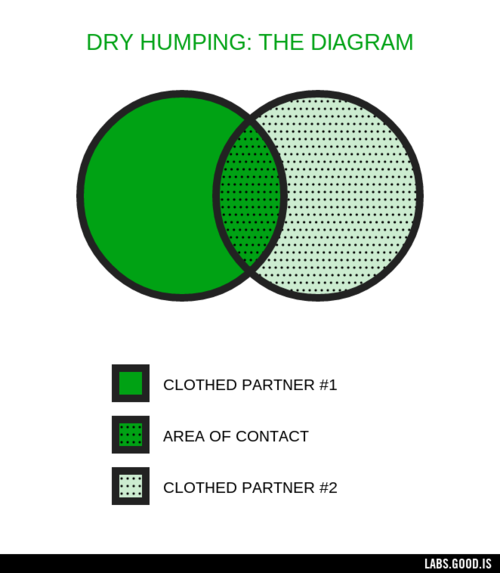
Do you all have weeks where the politics of your job overwhelm the actual job itself? This was one of those weeks, and it had nothing to do with the election. But what a wonderful day of democracy in this nation: to be upheld and revered, as democracy in many other nations is not possible, or safe, or fathomable. Some really amazing things happened for women in this election, and I am hoping to have a few spare moments to share that list with you all. For now, here's a list of everything else I enjoyed from this week....Governmental Coercion in Reproductive Decision Making: See It Both Ways - Sneha Barot at Guttmacher InstituteAn incredibly informative article researching coercion to have, and not have, babies: decisions made for women either way. Best article of the week, hands down. Check out the entire article above. "...From time immemorial, societies, religions and governments have often defined women’s value by their reproductive capacity. And they have subjected women, as childbearers, to coercion— either to have or to not have children for the greater good of those other than themselves. The means have ranged from explicit mandates to more subtle incentives or deterrents to steer reproductive decision making. No matter the motivation for such policies—fears of a population explosion or implosion and the resulting impact on economic or environmental security; the desire for more workers, soldiers or patriots; or religious orthodoxies, which continue in the modern era to be a driving force, in both developed and developing nations—the reproductive self-determination and human rights of individual women are sacrificed.In the latter half of the 20th century, attention to reproductive rights violations has focused largely on actions by governments to curtail what they view as “overpopulation.” History is overflowing with examples, but perhaps the most notorious was India during the 1970s. Amid anxiety about the impact of high population growth rates on deepening poverty, the national government of India established population targets, condoned mandatory sterilization laws among various Indian states and designed punitive disincentives for large families—all resulting in a dark era of widespread coercion and reproductive abuses, particularly among the poorest classes. Similarly, in the 1990s, under former President Alberto Fujimori’s regime, Peru sanctioned coercive and forced sterilizations of more than 346,000 poor and indigenous women and almost 25,000 men through intimidation and force.1 China’s one-child policy—under which involuntary abortions are frequent if not technically condoned—fits this pattern.Less attention, meanwhile, has been focused on equally reprehensible governmental efforts to control fertility at the other end of the spectrum: to compel pregnancy and childbirth. The height of such coercion in the modern era was experienced under President Nicolae Ceausescu’s dictatorship in Romania from 1965 to 1989.2 Under that repressive regime, the state implemented a radical pronatalist policy that outlawed all forms of contraception and banned abortion, except for women older than 45 who had at least five children who were still minors. Enforcement of these policies was carried out by mandatory monthly gynecologic exams, and special state agents were stationed in health settings to investigate illegal abortions. Combined with numerous other coercive incentives and disincentives, these policies reaped disastrous health consequences. Maternal mortality—mostly the result of unsafe, illegal abortions—skyrocketed by 1989 to the highest level in Europe. And because of its close relationship to maternal health, infant mortality also soared, while among those children who survived, thousands were abandoned in orphanages without basic food, health care and attention..."...She's Beautiful When She's Angry - Mary Dore and Nancy KennedyTwo websites for this one - Kickstarter.com to raise support to finish the film, and the homepage for the project. A film about the beginning of the women's liberation movement, featuring this quote from a daughter of a suffragist: "You're not allowed to retire from women's issues." Ain't that the truth. ...The Waiting is the Hardest Part - Anonymous at TomorrowAn incredible view into the difficulties of obtaining healthcare and preserving privacy in certain parts of the country, the lengths that women will go to geographically, financially and emotionally to get what they need, and affirmation of choice. "...We had become covert operators, doing our best to head off any questions about our personal lives. When I lived on the East Coast, the idea of becoming a social pariah for something that happened in a physician’s office was alien. I hardly knew the people who lived next door, let alone what went on between them and their doctors. Now, the possibility of being judged by nosy neighbors was a major consideration when dealing with my own health....Part of the problem is that the reproductive health burden falls so heavily on Planned Parenthood. Alaska is a Republican stronghold, but thanks to a strong libertarian streak, it’s been historically good on abortion rights. The state has a privacy clause in its constitution, and it legalized abortion before Roe v. Wade. There were even a number of providers through the mid-1990s. But private practices stopped offering services, and they haven’t been replaced.Planned Parenthood administrator Clover Simon thinks politics—both new laws and social pressure—are to blame for the limited access. Like Megan, she says the fact that only doctors can administer the pills for medication abortion isn’t good for rural women. But she also thinks that fear of malpractice suits is a weak reason for not offering them..."...Labor, Interrupted - Nell Lake at Harvard MagazineThis is an article that I feel as though I have already posted, but cannot find evidence of having done so. Perhaps it is the topic and content that feels so repetitive, so important, and that so many around me have repeated that makes it seem redundant. Redundant to some, news to many, and important to all. "...ACCORDING to the U.S. Department of Health and Human Services, 85 percent of American pregnancies achieve full term without complications. That’s a figure that many midwives—who in 2011 attended 11 percent of births, mostly as staff in hospitals—believe Americans often lose sight of. They say that simply seeing pregnancy and birth as normal, rather than a priori as a medical problem, would help lower the C-section rate. Cara Osborne, S.D. ’07, a certified nurse midwife and professor at the Eleanor Mann School of Nursing at the University of Arkansas, believes that “an atmosphere of fear” surrounding childbirth drives C-sections. Midwives see birth, she says, as a well-evolved, physiologically sound process that, with the right support, usually turns out fine. (Otherwise, she says, the human species wouldn’t have a population problem.) Of course childbirth is “an inherently risky endeavor,” she says. “But we’ve somehow gotten to a place where we’ve lost trust in physiology.”Midwives’ training, Osborne says, focuses on optimizing the chances of vaginal birth throughout prenatal care and labor. Midwives usually spend more time with laboring women than obstetricians do, and studies have shown that even passive, nonmedical support during labor leads to better birth outcomes. Midwives are also far more tolerant of slow labors, and are therefore less likely to determine “failure to progress” (when a provider decides that labor is proceeding too slowly to be safe) or “obstructed labor” (caused by a mismatch, of position or size, between the baby’s head and mother’s pelvis)—among the more commonly stated reasons for proceeding to cesareans, says Janet Singer ’84. A midwife who teaches medical students and residents at Women & Infants Hospital of Rhode Island in Providence, Singer adds that “failure to progress” is perhaps the most-preventable reason for cesareans. In the twentieth century, diagnoses of failure to progress rose along with the C-section rate: from 3.8 percent in 1970 to 11.6 percent in 1989 to 16.1 percent by 1995, according to a 2000 study in Obstetrics and Gynecology..."...Project Unspoken - Emory UniversityI love the beginning of this video, showing the obvious differences in how women go about their personal safety in their daily lives, and how most men in the video think very little about it. A great summer intern project from Emory....Our Feminist Future Vs. God's Will - Sikivu Hutchinson at American HumanistWork seeking to keep feminist history and present fights alive in youth, and to name the origins of women's inequality in specific areas of religion and society, particularly empowering women who fight the fight in the toughest areas of urban America."...Mourdock’s Christian fascist views permeate through a significant portion of the Republican Party, which has rampaged against reproductive rights with medieval zeal. The GOP’s anti-feminist backlash poses the gravest threat for women of color, who historically never had the benefit of being viewed as “proper” rape victims because innocence and “virtue” were an oxymoron when you were a slave, “squaw” or concubine.In an era in which the wombs of African-American and Latino women are handily served up in every election cycle as welfare-queen-anchor-baby-spitting breeders, humanism has got to be culturally relevant, steeped in activism, and the everyday realities of communities of color.As the founder of the South Los Angeles-based Women’s Leadership Project (WLP), a feminist mentoring program for girls of color, I train my students to do humanist peer education on the everyday impact of racism, sexism, heterosexism, misogynistic language, violence against women, and media imagery. Central to WLP’s peer training is enabling students to develop a humanist critical consciousness about their shared struggle and history as sacrificial good black/Latina woman of faith. Aside from white evangelicals, our communities are the most religiously devout in the nation. Yet this religiosity is steeped in a deeply racist legacy of structural inequality and segregation..."...Dry Humping Freakout! - ClaireP at ScarleteenA wonderful visual article helping people understand how it is almost impossible to become pregnant from the clothed-and-grinding-penis-vagina scenario.  "...THE REAL DRY HUMPING DEAL:in order for there to be a risk of pregnancy, first of all, there needs to be direct genital-genital contact.This does not include genital and towel, or genital and shorts with holes you think are a tad on the large side..." ...National Institute of Clinical Evidence: Implement Delayed Cord Clamping Immediately - Amanda Burleigh at Change.orgAre you familiar with the awesome National Health Service (NHS) in the UK? Are you also familiar with the National Institute of Clinical Evidence (NICE) guidelines? Both are pretty amazing. This is a petition to get the NICE guidelines up-to-date on the cord clamping evidence. If you live in the UK, consider signing this petition. "...Research has shown that Immediate Cord Clamping deprives the baby of up to 40% of its intended blood supply. Research by Farrar, Duley et al shows that leaving the cord intact leads to a weight gain of up to 210g in the five minutes following birth. The blood that the baby is deprived of contains Stem cells, Blood cells and other natural hormones, intended to complete the birth process.Immediate Cord Clamping is a major risk factor for anaemia in newborns. Research studies by Van Rheenan, Andersson/Brabin and Mercer have shown that Immediate Cord Clamping leads to long term anaemia which impedes learning and development.Hospitals throughout the Western world have been practising Immediate Cord Clamping for 40-50 years and are now well into second generation cord clamping.We lack the knowledge about the consequences of Immediate Cord Clamping, but there is NO evidence to support Immediate Cord Clamping as routine practice..."...VDay - The State of Female America in NYC November 27thJoin us for a special evening moderated by Laura Flanders (GRITtv) and featuring Kimberle Crenshaw (UCLA School of Law), Eve Ensler (V-Day), Karen Higgins (National Nurses United), Ai-Jen Poo (National Domestic Workers Alliance), and others as we discuss how inequality and public policy affect violence against women, and celebrate those who work towards systemic change.WHAT: THE STATE OF FEMALE AMERICAWHEN: Tuesday, November 27.Doors: 6:30pm, Program: 7pmWHERE: Cooper Union, 7 East 7th Street, NYCTICKETS: $10 general admission* Purchase here >* V-Day has a limited amount of sponsored tickets available to THE STATE OF FEMALE AMERICA, free of charge. If you need a sponsored ticket, please emailtickets@onebillionrising.org